Firstly, I want to say that this might seem like an odd little thing to review as many people are very familiar with perculators and some probably have been using them for years.
I have not – not once used one before myself. So it was a bit of a learning experience for me.
It’s also possible that some readers might wonder what this has to do with fitness, biking, tech, and other things I review and discuss here.
Well, if you are a cyclist or runner you probably understand how much coffee goes hand in hand with both. Of course, not everyone is a coffee fan and some people eschew coffee for health reasons or because they consider it a drug or whatever. But many of us think of coffee as going right along with cycling, and running too.
I’m certainly not a connoisseur nor addicted to coffee as some are, and I don’t use it to wake up or have to have it to start my day but I do like and enjoy it, and I like the little bit of energy it may give me.
Mostly I wanted this percolator for mobile and outdoors use as we have a nice coffee-making machine for home use. Previously I had posted about the alcohol backpack stove and then the much safer and easier to use Aotu propane backpack stove and the pour-over method and collapsible silicone filter funnel cone dripper that I use with these (and still use when I don’t want to carry the entire 9-cup percolator with me). You use a regular coffee filter in it and it fairly quickly filters a nice rich cup of coffee when hot water is poured over it.
I wanted something that we could use if we are on a cook-out, a picnic, or going somewhere in the car for hiking but I wanted something bigger and that could brew bolder coffee than the smaller funnel-type method, and something that we might carry with us but not necessarily in a backpack.
And I had always heard about using a percolator for making coffee and was curious about using one for the stronger, bolder coffee that it might produce.
So of course I picked the absolute cheapest percolator I could find on Amazon and ordered it.
There are various sizes of perculators, but I happened to grab this 9 cup one, but there are smaller ones for making less coffee and larger ones for making more, so I wanted kind of an intermediate one. And it COULD be taken in a backpack, it certainly would fit – but would take up a fair amount of space versus the collapsible funnel method I mention above.
I of course read the reviews for this particular one beforehand and many of the reviews mentioned that it was a super super cheap and very thin and because of the thinness somewhat prone to denting or burning through.
But hey I paid 13 bucks for it, what can you expect? And if I really like it and it’s not very durable or burns through then I’ll order a nicer one, now that I found that a percolator works so well.
So the one I ordered is from a company called Primula and gets okay and fair reviews, with some people really not liking it and others mediocre on it while others liked it pretty well with caveats having to do with being careful with it and not burning through the bottom with super high heat.
Makes sense.
I gotta say – this really cheapo percolator works great for me. As long as you keep in mind that it is cheap and you don’t want to burn through the bottom by using too high of a heat – that’s the only caveat here.
But saying that; everything seems to be put together fine and it doesn’t look like it’s going to just fall apart.
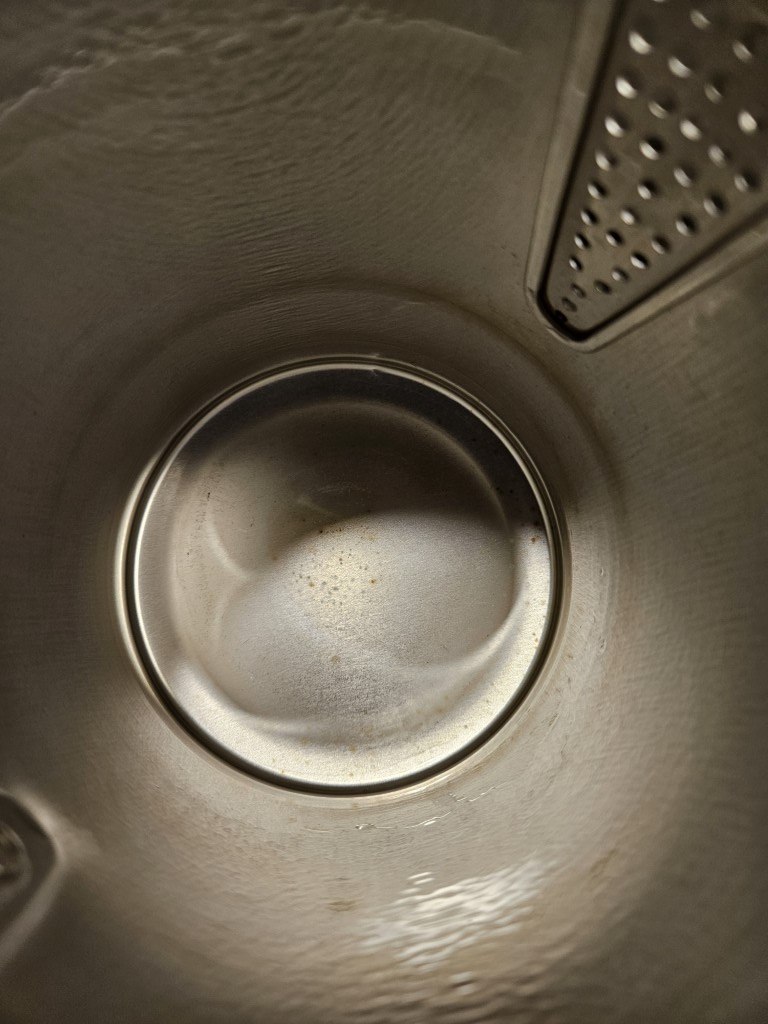
Even things like the handle are tightly fitted, the little percolator thingy at the very top – which normally is glass I believe – is plastic on this one. So put together well, but very cheap.
The actual first thing I did was find a plastic container that I could store it in with some foam arrayed around it, this not only would protect it from dents while storing it in between uses but also protect the thin sides when I take it anywhere.
In my case I used an old liner from a paper shredder, which is about the perfect size to protect it and just large enough to be able to put foam around the outsides of the perculator. And it also left room to carry a sealed bag of coffee and filters to be stored along with it.
Now, first of all, I’m going to talk about the filters before I even tell you about using the Primula 9 Cup Stovetop Coffee Percolator. Because in my research both for this particular percolator as well as others as well as reading about using these type of percolators, which have been around for decades, the general consensus is to use a medium or coarse ground of coffee and then you don’t need to use a filter. It supposedly doesn’t go through the little holes and you don’t get grounds in your coffee. Who would want that!?
I guess that’s all fine and well but a lot of the ground coffee I get is fairly fine so I did what most people suggested; I used a regular paper coffee filter in this percolator with a little slit or hole in the middle for the center tube of the percolator to pass through.
Maybe not the most economically friendly but at this point I have filters from literally decades ago that I’ve never used since our current home coffee machine has a rewashable reusable filter.
Upon receiving the percolator, it comes wrapped in plastic in its box and with a quick little basic instruction sheet.
Basically, it gives a bit of instruction on putting your coffee in, how much per amount of water, etc.
One of the points it makes is to make sure you don’t go over the three holes at the bottom of the spout on the inside as it can boil up and over and maybe splash grounds into the bottom, etc.
Once it’s ready you just put it on the heat and brew it until the coffee bubbling up into the transparent percolator cap shows the color of coffee that you want.
For my first test I made one single mug of coffee, this was measured out in my regular coffee mug which is equal to a couple of standard cup sizes I think. Also, keep in mind that you do lose some water in the form of steam that escapes, so put a little extra water in when you measure.
As mentioned above, I used a regular paper filter that I had made a slit in the middle of, and that I had slid down over the percolator tube and into the basket. I used two tablespoons of coffee, distributed in the filter.
Next I started my Aotu propane backpack stove up and set the percolator on top. Now if you’ve read my review of the propane backpack stove you know that it has little legs or I should say arms that open on the top, with little tips that flip out for more stability for pots to sit on.
For a small coffee mug or a small water pot or container of water this is perfectly fine but for this percolator, it does seem to overhang on the camp stove.
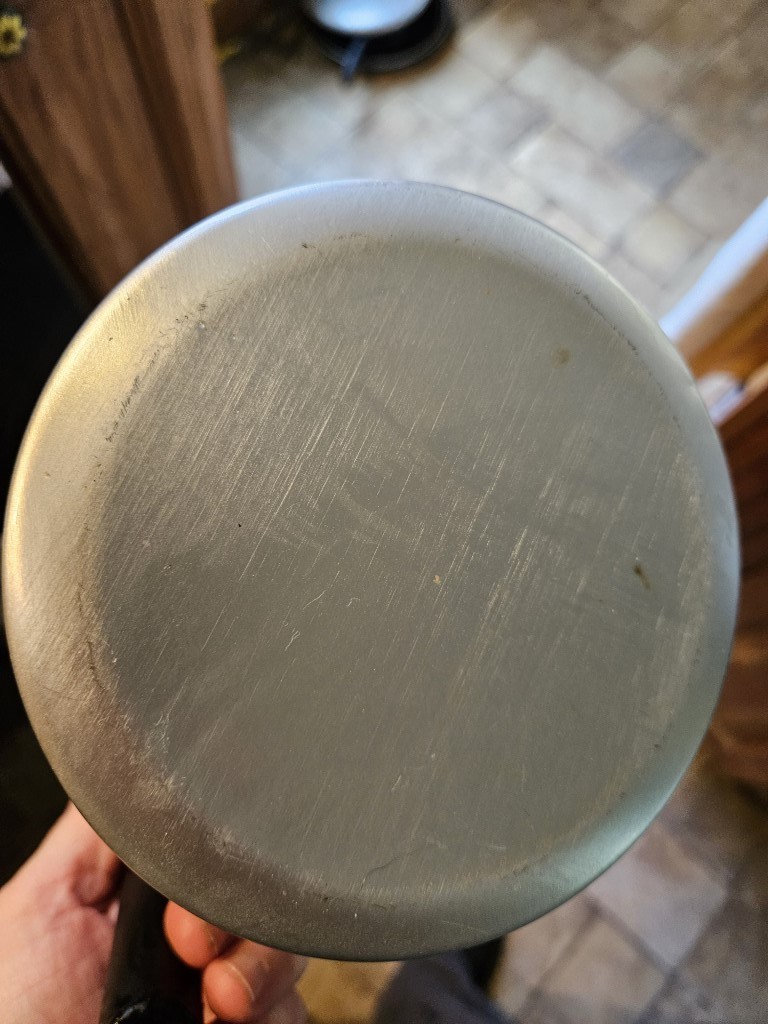
A quick look underneath and I can see the extended arms are under about 80% of the bottom of the percolator.
That’s not bad, though it looks top-heavy. And on top of the camp stove which is sitting on top of the tank which is sitting on the short legs that I got for it does seem a little precarious.
But after trying it a few times I think it does seem to be pretty stable, providing it is on the level ground. But you definitely don’t want it tilting on the camp stove, and when it starts percolating it also can rattle a bit and it’s possible that it could walk its way right off the side if you weren’t watching it. Keeping the heat down prevents it from rattling it seems.
I also guess that I probably wouldn’t just leave it and walk away. Not only to monitor the strength of the coffee, monitor the heat to make sure it’s not too high so as to burn through the bottom of the percolator, to be careful not to boil the water and make it bitter; but also to make sure it doesn’t move a bit and fall off.
So I guess it wasn’t a huge concern but I don’t think I’d want to leave it alone or leave it on unstable ground. Obviously it’s not good to walk away and leave anything cooking over an open flame anyway.
I guess optimally if I was out backpacking and I had a limited supply of water I would probably just put a few stones up around the side and put the camping stove inside, which also would stop any wind interference, so with stones up around the sides or something else it would stop the percolator from the possibility of it falling off I guess.
On a larger stove or an outdoor grill at a park, or over a fire with a grate or other things around it this certainly wouldn’t be an issue like it is on the small backpack stove.
Once I started the stove and put the percolator on I realized that, like most things I cook on this very efficient backpack stove, I had the heat turned up way too high.
If you read my review of the Aotu propane backpack stove you know that it’s a very efficient little stove and it’s very easy to run it at too high of a heat for pretty much anything you’re doing. I’ve found that the heating adjustment on it usually only needs to go to about 15 to 20% of the entire range that it is capable of.
After only about 3 or 4 minutes the percolator started percolating, but I quickly turned the heat down as it was making that roaring rushing noise of a high-temperature flame. Way more than I needed, and way more than I wanted to run under this thin aluminum percolator.
Plus it just was not necessary, absolutely did not need that high of a heat. Even if I were in a hurry I definitely would not want to boil the water in this and make a ruined cup of coffee.
So after the three or four minutes I turned the heat down quite significantly and it happily percolated right along nicely. Lesson learned – do not need high heat, just moderate heat to start it and then turn it down to low.
I let it percolate for maybe five or six minutes more, since I was only making one mug of coffee I felt that was all the strength that I needed. Perculatring longer gives you more strength and of course for making more coffee than a couple cups will take longer.
You can easily see the strength of the coffee bubbling up in the plastic transparent percolator thingy at the very top, and as it percolated at low heat I could see the coffee slowly darken.
At that point it was a simple matter of shutting the stove off taking the percolator off once it reached my desired darkness, the handle is warm but not hot.
Now I can’t stand things that are very very hot and burn my mouth if I try to drink or eat them, so I cheated a bit here and went inside and grabbed some ice. Yes, I was not out camping or backpacking or at the beach or anything for this first test, it was in my backyard on my deck as you can see from some of the pictures.
So for those of you who don’t like things that are very hot, you are going to have to wait for it to cool down or put some cold water in or ice or whatever because it is quite hot and steamy, even at a low percolating heat.
By the time I went in and got some ice and put in my mug I found that most of the percolator had cooled cool down to just fairly warm, not too hot for me to pick up. Really this was about the same amount of time it takes for the camp backpack stove to cool down. Obviously, the reason it cools so quickly is because the aluminum that makes up the pot is thin.
I probably still wouldn’t have wanted to put it away yet but a few more minutes and it was cool enough to do so, after washing out of course. It washes quickly, there are no real nooks or crannies that need scrubbing.
A quick rinse of all the parts got it clean and of course I took the filter out with the coffee, which makes it easier to clean the metal basket part.
This first time of use, I did notice that around the outside of the filter and in the basket were some few grounds but after drinking my coffee I found absolutely nothing in my coffee so I suppose the basket itself was enough of a filter and/or maybe my coffee wasn’t as fine as I thought it was.
I found that after using it a bit and not cranking the heat up too much seemed to solve the problem above and I didn’t notice any errant grounds that seemed to slip out. Definitely do not want to boil it. And positioning the filter to cover the whole basket without wrinkling, especially for fine grounds, is crucial.
Okay so to the most important thing – the coffee itself .
The coffee was excellent, it was moderately strong and full-bodied and smooth and bold, I’d even use word choices that I wouldn’t normally use for anything here; but it was also what I would call silky-smooth.
I suppose in a way it’s better than our regular home coffee maker as that uses the conventional drip method and this Primula 9 Cup Stovetop Coffee Percolator, in case you didn’t know this, works by heating the water to near boiling which causes the steaming water to run up through the little center pipe (that looks kind of like a metal straw) and then this comes out at the top and is spread over the coffee basket to drip back through. This happens continuously as you percolate so you’re not just getting one run-through of water through coffee grounds but multiple iterations of this.
Checking the percolator after it cooled, I noticed that the bottom of the percolator had a little bit of discoloring, probably from me running it a bit too hot at the beginning. I thought perhaps that it may be is just the normal discoloring of this type of heated aluminum. But I used a little magic eraser on the discoloring and it took it off, both inside and out, and it hasn’t come back after more uses.
Again this is one of those things you have to watch for not only with a backpack stove like the one I have but with anything you’re heating this percolator on, you don’t need much heat to get it percolating and then you can turn it down once it starts. It then sits there and percolates just fine. And even with a higher quality one, from what I have read you don’t want the heat too high anyway because you don’t want the water boiling up and making everything bitter as well as boiling out and around the top section. And as I mentioned above – letting it boil and get too hot also can risk getting grounds boiled out of the basket.
Of course, on the camp stove the percolator was much more stable than on the backpack stove. I don’t believe that there was any increase or decrease in the amount of time needed to get to the desired boldness, it takes the time that it takes and rushing it will damage the percolator, boil the water, and maybe mix grounds in and mess with the action of the drip process.
Over time I have made a fair amount of coffee with this and I have gotten a great cup(s) each time.
So I would have to say that I cautiously recommend the Primula 9 Cup Stovetop Coffee Percolator and I say ‘cautiously’ only because I believe that using too much heat on this will quickly ruin it, but otherwise it works very nicely, especially for the price.

 This review is for the Primula 9 Cup Stovetop Coffee Percolator.

 If you read my review of the Aotu propane backpack stove you know that it’s a very efficient little stove and it’s very easy to run it at too high of a heat for pretty much anything you’re doing. I’ve found that the heating adjustment on it usually only needs to go to about 15 to 20% of the entire range that it is capable of.